
Candy Arena
A creator-controlled rhythm duel built with React, Phaser, and a deterministic TypeScript battle engine. The creator plays the core combat loop; the audience contributes energy, assists, and direct gift skills.
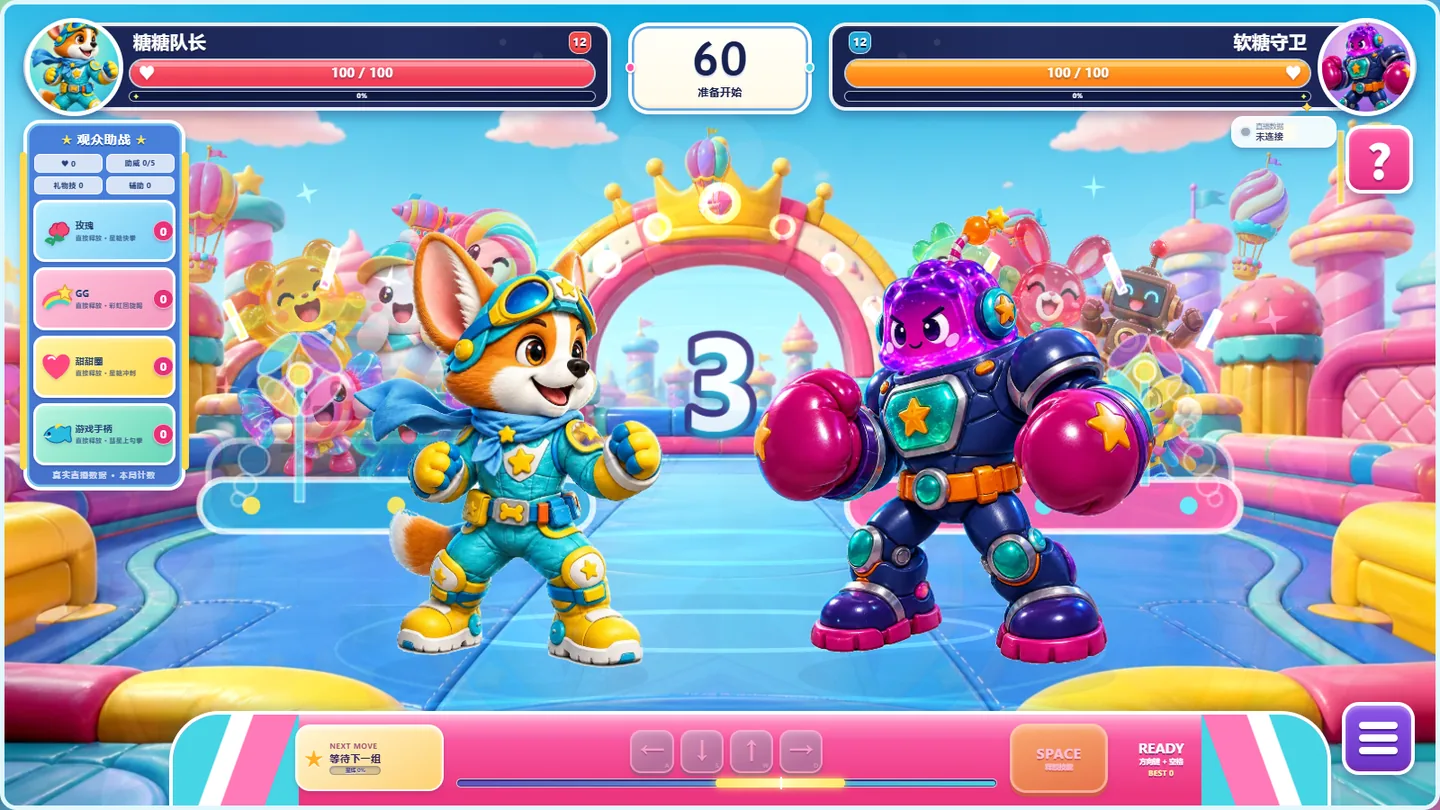
FORMATRhythm combat
STACKReact + Phaser
INPUTKeyboard + LIVE events
QUALITYUnit + E2E coverage
Two inputs, one battle engine
| Input | Game mapping | Boundary |
|---|---|---|
| Creator controls | Direction sequence, beat confirmation, and active dodge | Remains the primary way to win the duel |
live.like | Every 100 likes adds 2 hero energy | 20 energy maximum per round |
live.chat | Five distinct cheers within 15 seconds award one assist | Identity window and per-round storage cap |
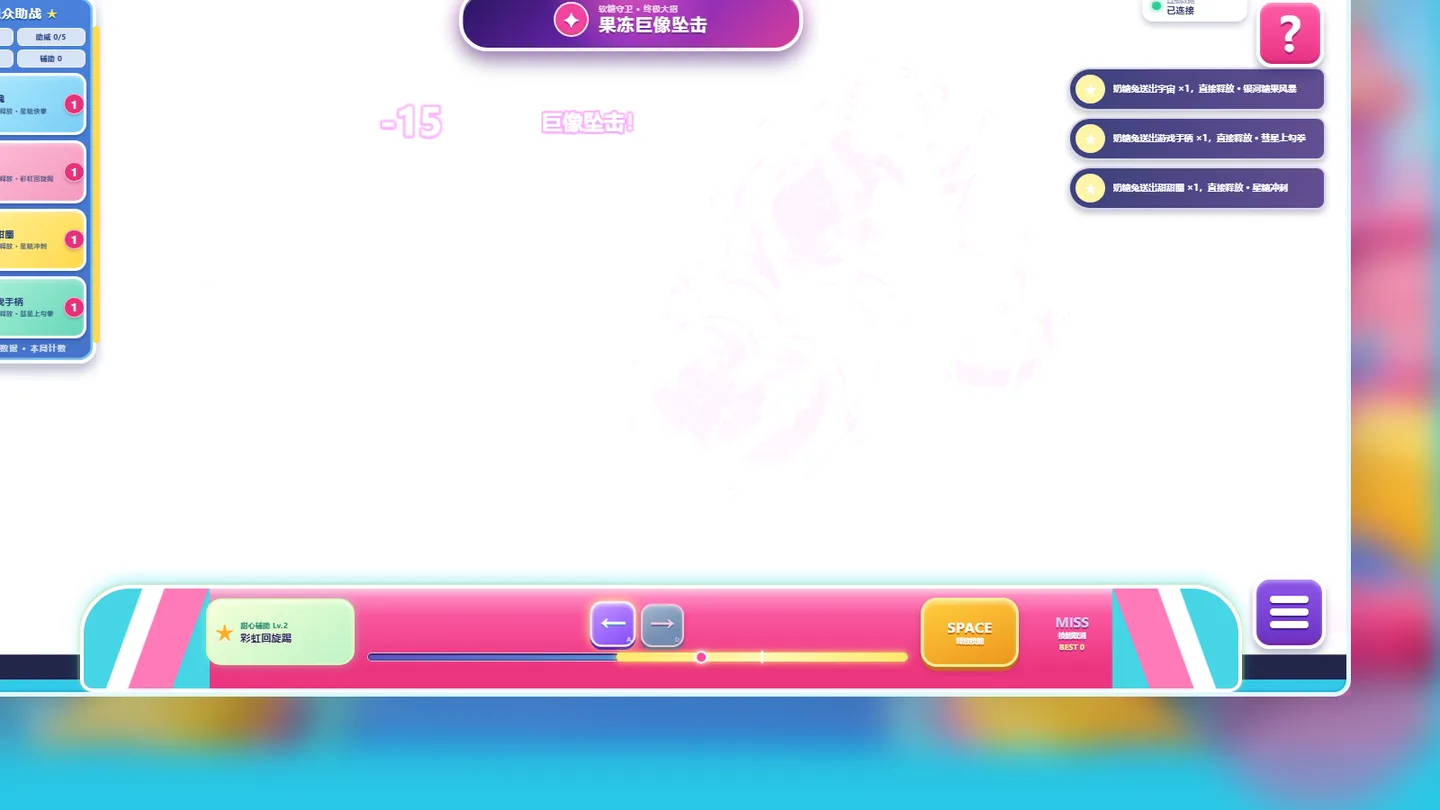
live.gift | Bypasses rhythm input and directly queues an existing hero attack | Strict ID matching, combo-delta handling, bounded TTL queue |
Gifts reuse the combat system
| Gift ID | Gift | Existing move triggered |
|---|---|---|
5655 | Rose | Star Jab |
6064 | GG | Rainbow Kick |
5487 | Finger Heart | Comet Uppercut |
5879 | Doughnut | Star Dash |
7569 | Game Controller | Comet Uppercut |
11046 | Universe | Galaxy Candy Storm |
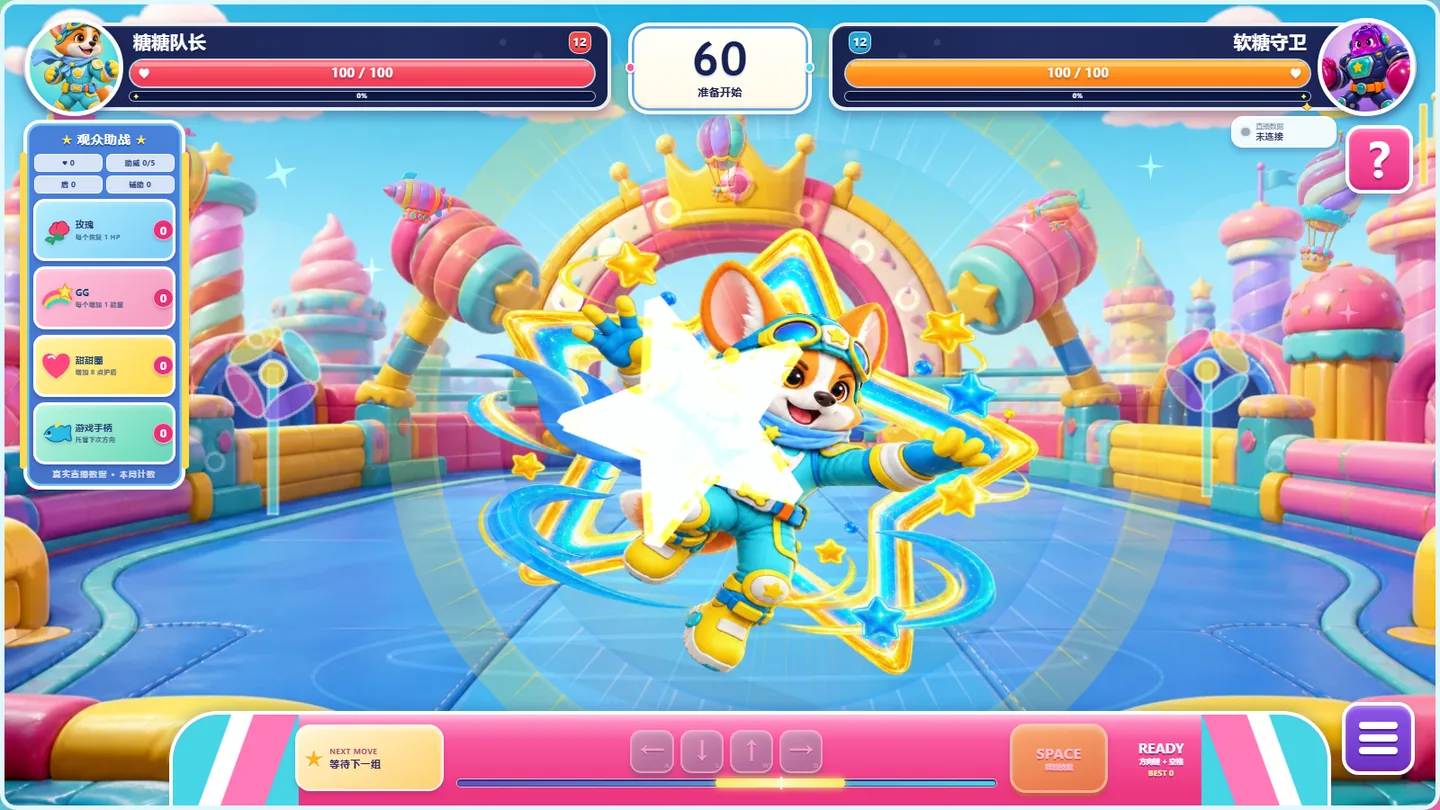
The integration does not maintain a second gift-only combat model. Gift events enter the same attack queue, animation state machine, hit timing, VFX, and sound path as creator-triggered moves.
How it was built
- Translate the visual target into a playable loop. React owns HUD and controls; Phaser owns the arena, characters, camera, and effects.
- Make combat deterministic. A fixed-step engine separates damage and timing from rendering, making the duel reproducible and testable.
- Add creator skill. Direction sequences, beat grades, combo, ultimate energy, and active dodge keep the game playable without live events.
- Connect Local Data Access. The client scans the dynamic loopback range, authenticates, normalizes public events, and routes them through a dedicated interaction controller.
- Iterate presentation and quality. Character poses, arena depth, audience animation, gift-specific VFX, audio, responsive layout, texture checks, unit tests, and multi-resolution E2E checks were added incrementally.
- Separate public demo from real access.
?demo=1skips credentials and emits labeled simulated events; the default URL preserves the real LIVE Studio connection gate.
Combat presentation
Engineering takeaways
- React and Phaser communicate through the battle engine instead of mutating each other's state.
- The live controller owns cheer windows, like milestones, gift combo deltas, queues, and broadcast text.
- Broken or unknown events do not interrupt the fight; reconnect behavior is independent of battle time.
- Startup credentials are removed from the DOM after submission and never enter URL or Web Storage.
- Public demo mode is explicit and simulated. It cannot be confused with a successful live-room connection.
Next: implement the JavaScript client or browse the gift catalog.